



-
Freigeben
-

-

-

-

Aktualisierte 2 Stunden
Thermopapierrollen: Definition, Arbeitsprinzip, und Praktische Einblicke

JINBAO
Jinbao Paper betreibt eine moderne Fabrik mit strenger Qualitätskontrolle und exportiert Thermopapierrollen in über 20 Länder in ganz Europa, Asien, und Nord- und Südamerika. Das Unternehmen unterstützt OEM-Anpassungen, Schnelle Lieferung, und wettbewerbsfähige Preise für globale Kunden.
Jinbao Paper hat sich auf die Herstellung von Thermopapier spezialisiert, Kopierpapier, Etikettenmaterial, und andere papierbasierte Verbrauchsmaterialien. Mit 34 Jahre Erfahrung in der Herstellung und internationale Zertifizierung, Das Unternehmen hat sich verpflichtet, nachhaltige, Hochwertige Lösungen für den weltweiten Druckbedarf.
Understanding What Thermal Paper Rolls Are
Thermal paper rolls are specially coated papers designed for thermal printers, which produce text or images without ink, Toner, oder Bänder.
Instead of transferring ink onto the paper, thermal printing relies on heat to activate a chemical coating, making it one of the most efficient printing technologies for high-frequency use.
Because of this simplicity, thermal paper has become a standard consumable in retail, Logistik, Gesundheitswesen, and automated systems worldwide.

The Core Structure of Thermal Paper
Unlike ordinary paper, thermal paper features a heat-sensitive surface layer. This coating typically consists of two functional components:
- Leuco Dye – a colorless dye responsible for image formation
- Developer – a chemical agent that reacts with the dye when heated
Modern thermal papers increasingly use BPA-free or phenol-free developers to comply with regulatory and safety standards.
How Thermal Printing Creates Images
When a thermal printer operates, its print head selectively applies heat to precise areas of the paper surface.
Where heat is applied, the dye and developer react instantly, producing visible text or images—usually in black.
This process is:
- Instant
- Silent
- Highly reliable
Because no ink or ribbon is involved, printing errors and mechanical failures are significantly reduced.
Why Thermal Paper Is Preferred in High-Volume Printing
Thermal paper is rarely chosen for visual quality alone. Its popularity is driven by operational advantages that matter in real-world applications.
Key reasons include:
- Minimal maintenance requirements
- Stable performance in continuous operation
- Compact printer design
- Faster output compared to ink-based systems
For businesses processing hundreds or thousands of prints daily, these advantages translate directly into lower downtime and operating costs.
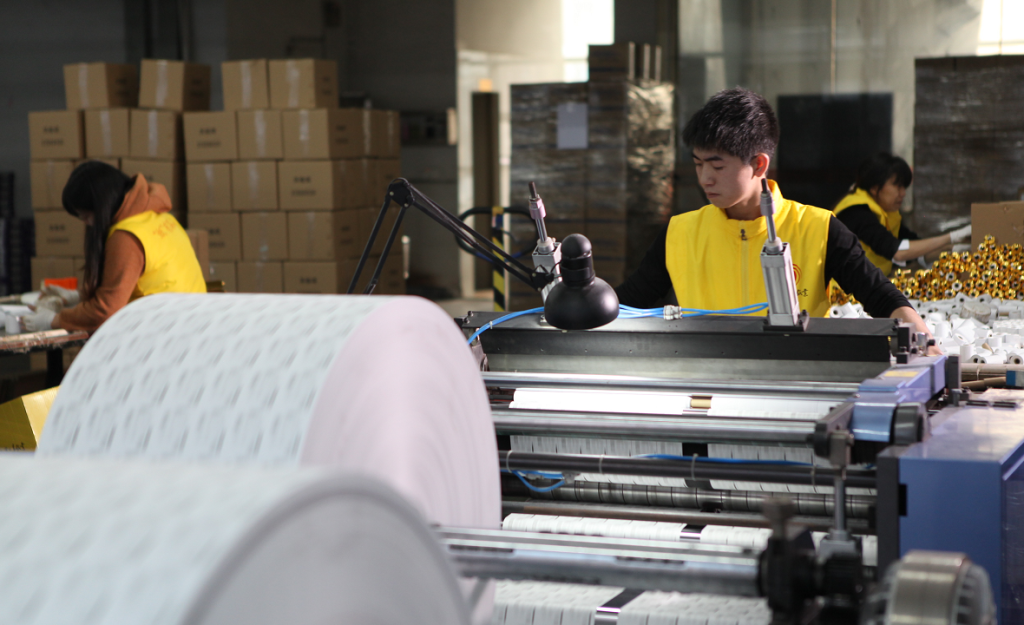
Typical Applications Across Industries
Thermal paper rolls are deeply embedded in everyday commercial and industrial activities, einschließlich:
- Retail and POS receipts in supermarkets and restaurants
- Card payment terminals for transaction records
- Shipping and logistics labels with barcodes and tracking data
- Ticketing systems for parking, events, and lotteries
- Medical equipment such as ECG and monitoring devices
- Portable printers and label makers used in field operations
These applications share one common requirement: speed and reliability over long-term document preservation.
Performance Benefits of Thermal Paper
Thermal paper offers several practical advantages:
- Fast, quiet printing, ideal for customer-facing environments
- No ink or toner consumption, reducing consumable complexity
- Compact printer compatibility, enabling mobile and space-saving devices
- Cost efficiency at scale, especially in high-volume use
While the paper itself may cost more than plain paper, total printing costs are often lower when maintenance and consumables are considered.
Limitations to Be Aware Of
Despite its benefits, thermal paper has inherent limitations that users should understand.
Printed content may fade or darken over time when exposed to:
- Heat
- Direct sunlight
- Alcohol or plasticizers
- Physical friction
Das Ergebnis, thermal paper is not suitable for long-term archival purposes.
Environmental considerations also exist, as the chemical coating complicates traditional paper recycling processes.
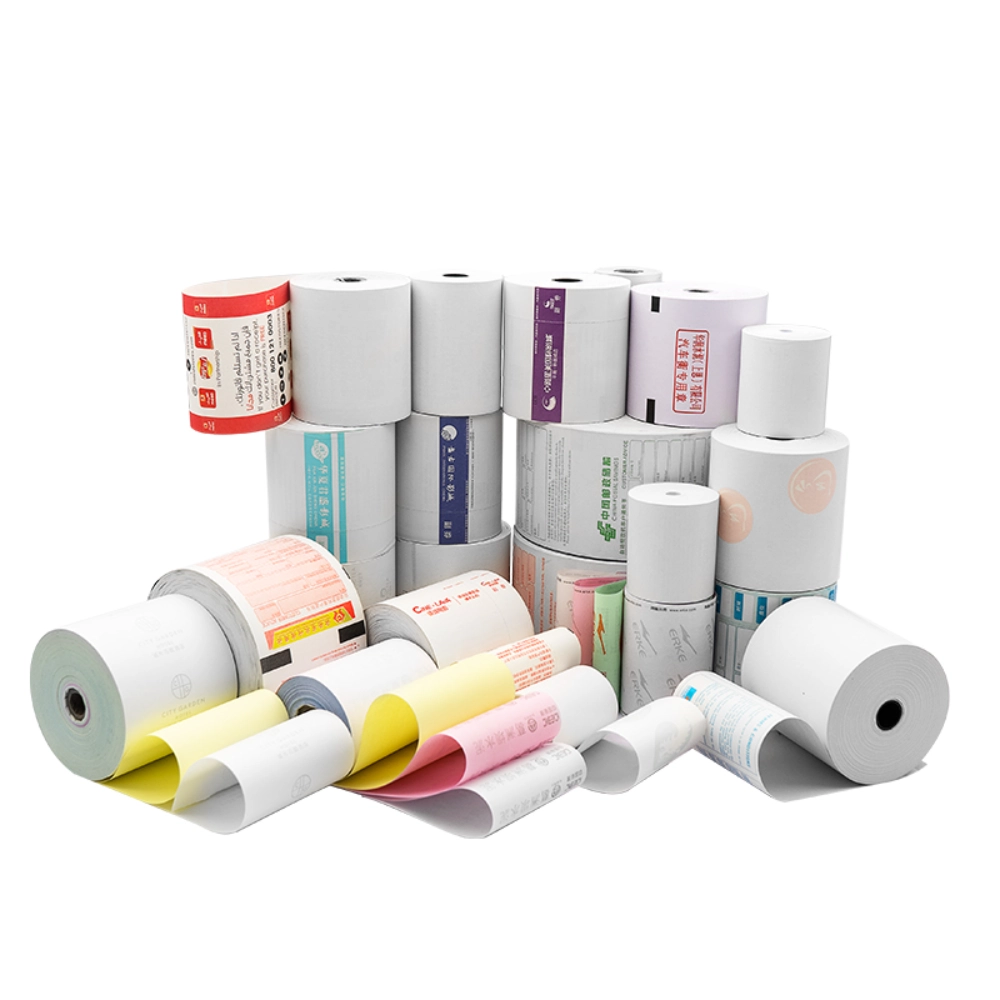
Identifying Thermal Paper in Practice
Thermal paper can be identified easily through simple physical tests:
- Scratching the surface often leaves a dark mark
- Brief exposure to heat causes visible discoloration
These reactions occur because friction or heat activates the thermal coating.
Storage and Handling Recommendations
To maintain print clarity and paper performance:
- Store thermal rolls in cool, trocken, and dark conditions
- Avoid direct sunlight and heat sources
- Keep away from PVC materials and chemical exposure
For receipts or records that must be retained, digital backups are strongly recommended.
Industry Manufacturing Overview
Thermal paper is produced globally, with major manufacturing regions including East Asia, Europa, und Nordamerika.
While specifications may appear similar, differences in coating formulation, base paper quality, and consistency can significantly affect performance and print longevity.
For this reason, professional users often evaluate thermal paper based on Stabilität, Beachtung, and printer compatibility, rather than price alone.

Schlussfolgerung
Thermal paper rolls remain an essential consumable for modern transaction and automation systems.
Their speed, simplicity, and reliability make them the preferred choice for short-term information printing, even as sustainability and chemical safety continue to evolve.
Understanding how thermal paper works—and where its strengths and limits lie—helps businesses make informed decisions for efficient daily operations.
Geschrieben von
JINBAO
Jinbao Paper betreibt eine moderne Fabrik mit strenger Qualitätskontrolle und exportiert Thermopapierrollen in über 20 Länder in ganz Europa, Asien, und Nord- und Südamerika. Das Unternehmen unterstützt OEM-Anpassungen, Schnelle Lieferung, und wettbewerbsfähige Preise für globale Kunden.
Jinbao Paper hat sich auf die Herstellung von Thermopapier spezialisiert, Kopierpapier, Etikettenmaterial, und andere papierbasierte Verbrauchsmaterialien. Mit 34 Jahre Erfahrung in der Herstellung und internationale Zertifizierung, Das Unternehmen hat sich verpflichtet, nachhaltige, Hochwertige Lösungen für den weltweiten Druckbedarf.
Wir kommen zurück 24 Stunden
Verwandte Artikel
Thermopapierrollen: Definition, Arbeitsprinzip, und Praktische Einblicke
2026-01-12
Warum immer mehr Branchen langfristig festhalten
2026-01-10
Nach oben 10 Hersteller von Kassenpapier in China
2026-01-09

Thermo-Kassenpapier: Ein Leitfaden für Kettenunternehmen von technischen Merkmalen bis zum kommerziellen Wert
2026-01-08
